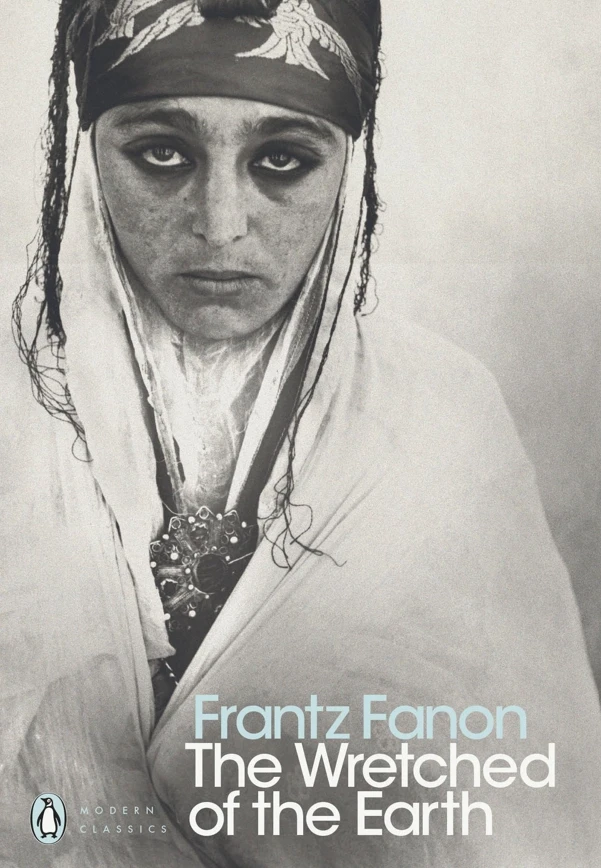
"In the capitalist countries a multitude of moral teachers, counsellors and 'bewilderers' separate the exploited from those in power"
— Frantz Fanon, 1963, The Wretched of the Earth, p.29, Farrington translation
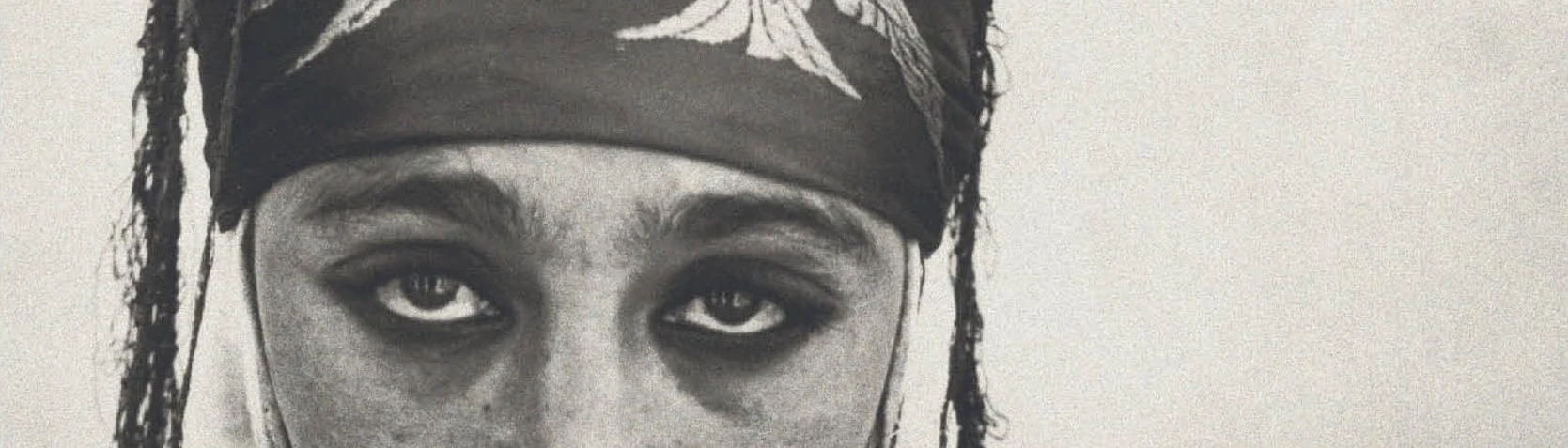
As a counsellor myself, this quote strikes at the heart of a tension within me. Often felt. Rarely articulated. In a nutshell, to what degree does the counsellor maintain a buffer between the exploiter and the exploited? Morphing systemic attacks into individual wounds?
To gain a clear footing here before I step into the discussion, I must first try to add some context to the quote above. In Fanon's original text he used the French word 'conseillers'. This almost definitely had a different meaning to the profession of 'counsellors' which we speak of in English nowadays. In the original usage he appears to be referring to the useful mediators and the consent manufacturers for the machinery of oppression within society. Those who would redirect and mystify upward dissent. So, there's a gap here, between his original meaning and my initial interpretation. Or at least I thought there was until I did some further reading about his life.
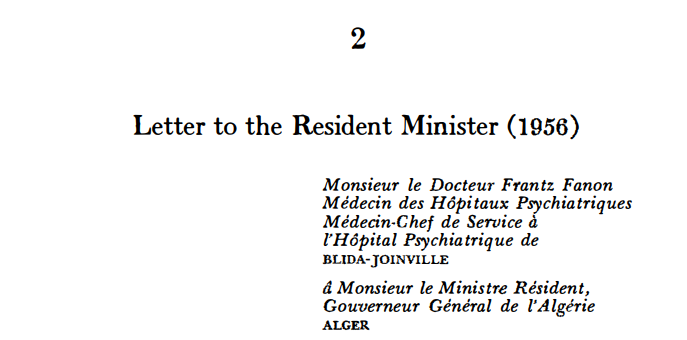
Fanon himself was a psychiatrist. Not only did he enter into his job at a psychiatric hospital in order to "attenuate the viciousness of a system of which the doctrinal foundations are a daily defiance of an authentically human outlook", he also resigned from that position three years later as he could not "continue to bear a responsibility at no matter what cost on the false pretext that there is nothing else to be done".1
1 Fanon resigned from the position of medical director at the Blida-Joinville Psychiatric Hospital in 1956. Details of this can be read in his 'Letter to the Resident Minister (1956)', which can be found in his collection of essays called 'Toward the African Revolution'. The resignation letter itself is a short read, but an inspiring example of incisive and uncompromising writing.The quote at the top of this piece is shot full of conviction; probably because he lived it. He entered the psychiatry role to treat those being met by the sharp end of a dehumanising system. He left to join the FLN (Front de Libération Nationale), where he became a full-time militant, writer, and diplomat in the Algerian War of Independence. Listening to his words and seeing his action, it is clear he felt unable to effect change within the existing system, whilst retaining his dignity and moral clarity. This was a decision made by a man almost exactly seventy years ago, in Algeria. How does this choice, and the sentiment behind the quote, provoke such a strong reaction from a therapist in Derby in 2026?
I've often had a sense that psychotherapy has an uneasy blind spot when it comes to wider societal discussions. As I progressed through my master's degree in integrative counselling and built up my practice hours - I was seeing and learning more about the impact that societal attitudes, discriminatory policy, unequal working conditions have on the individual. We are told these 'wider environmental factors' are important to understand and explore with clients.
I can remember numerous times exploring these kinds of issues at university and with clients – racist attitudes taken as a given, a part, a norm of British society. Working conditions that violate common human dignity and respect. Political impotence which threatens the natural environment and inflicts violence on our fellow humans. We identify these issues. We explore the impact on the client. The emotional effect. The cognitive shifts. The effect on their attitudes towards themselves, others, figures of authority, supposed forces for 'good'. We understand. I empathise. We explore. I stick. I cannot budge it. The acknowledgement of this huge weight, this stratospheric hammer which thumps away at my client. I see it. It looks immovable. It feels immovable. We sigh. We move on.
In some cases, perhaps we look at what the client may be able to do to effect change in some way. But the hammer remains. Looming. I can't help but feel this exact position is the "false pretext that there is nothing else to be done", which Fanon speaks of in his resignation letter. Reading Fanon's words on the separation of the exploited from those in power was the first time I had seen this feeling within myself articulated. It connected the dots. It also told me the unease, the guilt, incompleteness that I feel, is deserved.
It feels important for me to state that everything said up to this point, whilst feeling true to my experience, is also one aspect of my feeling towards therapy and the role of the therapist. Sitting alongside it is another part, just as clear.
This other part is difficult to quantify. It's sitting across from a client. Seeing words form in their mouth. Words which haven't seen the light of day for fear, or shame, or embarrassment. Words which release weight. The body exhales. The room seems lighter. We both notice. I feel just as convinced of the potential for immense positive effect that therapy can have on the individual.
I don't see any contradiction between therapy having positive, transformative potential for the individual, and questioning the therapist's role in acting as a useful buffer for exploitative systems of power. Instead, it leads me towards a question that sits at the intersection of these worlds – to what extent does the therapist's attitude and mode of operation contribute, supplement, or cover for the dehumanising effect inflicted upon clients by external systems of oppression?
I remember voicing or attempting to voice my thoughts and feelings around this, in a group reflective discussion with my peers and tutor at university. I hadn't heard any discussion on this in my two years (at that point) of study and felt isolated in those thoughts. How was everyone else dealing with the weight? Was the weight a figment of my imagination? When I expressed my thoughts on the topic, it was met by the group with what felt like a gut acknowledgment. A communal 'yes, we know, we've seen, we've felt this'. I can't remember the response I got verbatim, but it was along the lines of 'yes, that's true, it's a painful reality, but we are limited by our role, we can only do what we can do'. End of discussion. This did not feel satisfactory.
That discussion impressed on me the dangers of the entirely individualised psychotherapist. Fanon's statement picked up this fear, followed the logic, and gave me questions.
To what degree do I reinforce the useful buffer, tacitly abiding by harmful forces of oppression? As counsellors, if we transform a systemic pressure into an individual's coping mechanism, are we not burdening someone with an insurmountable weight? When does my inaction begin to tolerate the inhumane?
I knew these questions would not just fade from my mind, becoming a curious thought I'd once had. They had a grip on me. After a little while of feeling utterly powerless to them, I figured what I can do now, at a bare minimum, is read. So, I did. I quickly realised that many others have identified this exact sentiment. Furthermore, it exists as just one element within entire schools of thought. I was joining a conversation with a rich history.
To give you a flavour of what these discussions have sounded like - some appear in opposition to oppressive institutional structure. Such as the Catalan psychiatrist François Tosquelles, whose concept of 'institutional psychotherapy' argued that the very psychiatric wards that were meant to be treating individuals, were inflicting harm and worsening their 'madness'.2
2 Tosquelles was in fact the intellectual and clinical mentor of Frantz Fanon at Saint-Alban-sur-Limagnole asylum in southern France. Fanon took Tosquelles' observation of the authoritarian psychiatric wards, their effect on the individual psyche, and expanded it to the Algerian colonial struggle against France. Injecting a more radical, revolutionary drive into it.Others have a broader starting point and begin their examination at the level of society. Such as Ignacio Martín-Baró, a Spanish Jesuit priest and social psychologist, and the founder of 'liberation psychology' – which at its core believes that mental distress is often borne out of systemic injustice rather than individual pathology. An element of this school of thought, which feels relevant to the topic at hand, is its explicit rejection of the politically neutral psychological practitioner.3 Martín-Baró saw a response to this in raising the critical consciousness of society and placing emphasis on caregiving as a collective.
3 This is another core aspect of the discussion. Where, when, how, if, politics enters the therapy room, specifically through the practitioner's conduct. The tension here thickens when acknowledgement of inhumanity and congruent behaviour meets self-disclosure, non-judgement, and impartiality. It's my opinion that to be apolitical as a human within a society is almost an impossibility, even more so in a role dealing with mental health. This is a thread to follow another time.And lastly, there is David Smail, a British clinical psychologist who for a period was the head of NHS clinical psychology services in Nottingham, only a stone's throw from Derby. He held a similar view on the need to look outwards at society when treating the inner world of the mind, giving particular attention to the limitations of one-to-one talking therapy. Smail's ideas went on to influence activist movements in the UK like 'Psychologists Against Austerity' in 2014, along with the continued work of the 'Midlands Psychology Group' which he founded in 2002.
These examples give me hope. They are testament to the fact that the resignation and deflated shrug are not the only options available. Whilst I don't know what the next step looks like, I do now know that the weight I felt in the room is real. It's a weight that has long caused tension in the spine of psychotherapy.
The book cover and the letter page are reproduced from Frantz Fanon's The Wretched of the Earth (Penguin Modern Classics) and Toward the African Revolution respectively, © the respective publishers and rights holders. They are included here solely for the purposes of criticism, review, and analysis under fair dealing (UK) / fair use (US) principles. No copyright infringement is intended, and no ownership of these images is claimed. If you are a rights holder and have concerns about this use, please get in touch and the images will be removed promptly.